
Quick facts about colorectal cancer
Most colorectal cancer starts with the development of growths, called polyps, on the inner lining of the intestine.
Colorectal cancer is the second most common cancer in Malaysia.
1 in 55 men and 1 in 76 women in Malaysia are at risk of contracting colorectal cancer.
Types of colorectal cancer
Colorectal cancer refers to both colon cancer and rectal cancer.
-
Colon cancer
Colon cancer originates in the large intestine, also known as the colon. In many cases, early signs of colon cancer include non-cancerous polyps in the colon.
-
Rectal cancer
Rectal cancer develops in the end of the large intestine, known as the rectum. Like cancer found in the large intestine, it can begin with the formation of non-cancerous polyps.
Signs and symptoms of colorectal cancer
As signs and symptoms for colorectal cancer can be similar to other common conditions such as haemorrhoids, it’s important to see your GP or healthcare professional if you experience any of the symptoms below. Discussing anything concerning with your doctor as soon as possible can help give you peace of mind and offer the best chance of successful treatment if you receive a colorectal cancer diagnosis.
Symptoms may include:

Sudden changes in bowel movements, like diarrhoea, constipation, narrower stools, or stools that contain mucus

Unexplained weight loss or loss of appetite

Bright red or dark blood in your stool or on the toilet tissue

Pain in your stomach with or without swelling

Constant gas or bloating in the bowel or rectum

A lump or pain around the anus

Unexplained anaemia (low iron) which can cause tiredness and breathlessness
Stages of colorectal cancer
The TNM system is used to stage colorectal cancer, and it helps doctors understand what your cancer looks like. The TNM stands for:
Tumour – The degree to which the tumour has affected other tissue, for example has it grown outside the wall of the rectum or colon
Node – Is a measure of whether lymph nodes have been affected
Metastasis – The degree to which the cancer has spread to other organs of the body
The TNM information, along with other tests, helps determine the stage of your colorectal cancer using the guidelines below:
-
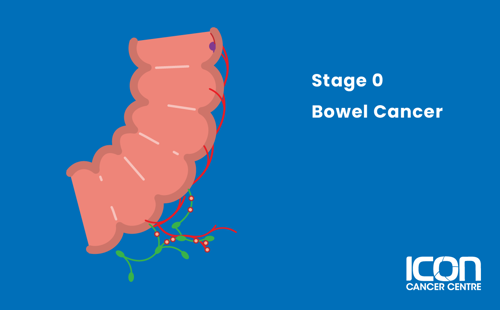
Stage O
The cancer is in its earliest stage and has not spread beyond the inner layer (mucosa) of the colon and rectum.
-
Stage I
The cancer has been found in the mucosa, and has spread beyond the inner layer of the colon or rectum to the submucosa, but not to the lymph nodes.

-
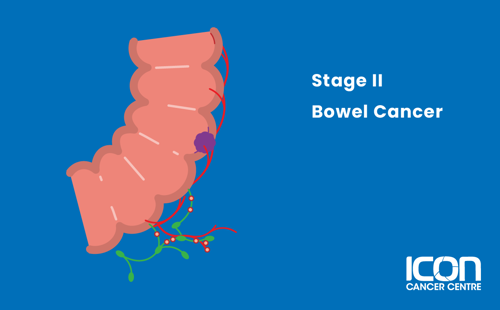
Stage II
The cancer has spread beyond the layer of muscle surrounding the bowel and reached the outermost layers of the colon or rectum and surrounding areas, but has not spread to the lymph nodes.
-
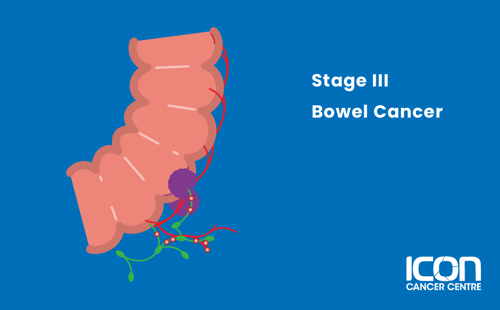
Stage III
The cancer has spread to the lymph nodes, but not to distant organs.
-
Stage IV
The cancer has spread to distant organs (e.g. lung, liver, peritoneum) throughout the body.

Treatment for colorectal cancer
There are many different types of treatment for colorectal cancer. Your treatment will depend on you and your cancer.
Frequently asked questions about colorectal cancer
Helpful resources
References

Make an appointment
Find out how to become a patient at Icon, or request more information from your nearest centre.
Enquire today
Our doctors
Icon brings together some of the region's most experienced medical oncologists, radiation oncologists and haematologists.
Learn more
